
2 million EPAL CP pallets produced
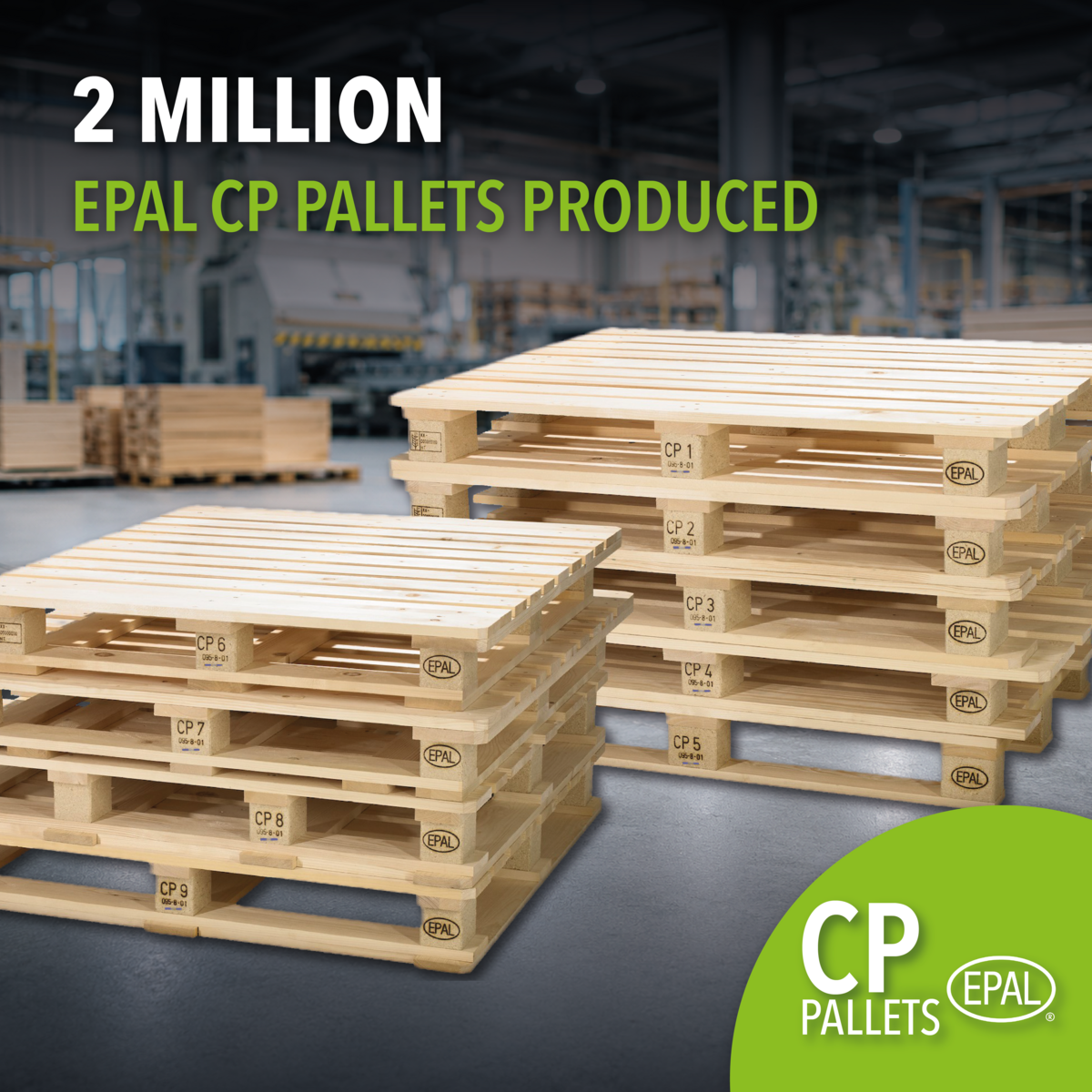
Just a few months after the market launch of the new EPAL CP pallets in January 2026, production has already exceeded the 2 million mark. This milestone highlights the strong demand for standardised, quality-assured and reusable load carriers in the chemical industry.
With the introduction of the new EPAL CP pallets, the European Pallet Association e.V. (EPAL) has expanded its product portfolio by nine pallet types specifically designed to meet the requirements of the chemical industry. EPAL CP pallets combine the established CP pallet standard with the advantages of the EPAL system, providing the foundation for efficient, safe and sustainable chemical logistics.
The high production volume achieved within just a few months demonstrates the chemical industry's confidence in the quality of EPAL CP pallets and in the proven EPAL Open Pallet Pool system.
Nine pallet types for the diverse requirements of chemical logistics
The nine EPAL CP pallet types (CP1–CP9) are designed to meet the different packaging and transport requirements of the chemical industry. They are suitable for transporting drums, bags, big bags and octabins, among other goods.
Like all EPAL pallets, EPAL CP pallets are subject to strict technical regulations and regular independent quality inspections. Standardised dimensions and consistently high quality also ensure reliable use in modern automated warehousing and logistics systems.
Reusability and international applications
As reusable transport packaging, EPAL CP pallets support the circular economy and help reduce the need for newly produced pallets. They comply with the requirements of the EU Packaging and Packaging Waste Regulation (PPWR) and support companies in achieving their reuse targets.
By meeting the requirements of the International Standard for Phytosanitary Measures (ISPM 15), EPAL CP pallets are also suitable for use in international supply chains.
With more than 2 million EPAL CP pallets produced, EPAL continues the successful introduction of the new pallet standard and strengthens the role of standardised, quality-assured and reusable pallets in chemical logistics.